
How to choose a crossbody water bottle holder for a 40 oz tumbler
Handle or no handle, sleeve width, insulation, strap and pockets: how to match a crossbody holder to a 40 oz tumbler, with the Sportsnew slings side by side.
Read the guidePacking a pickleball bag
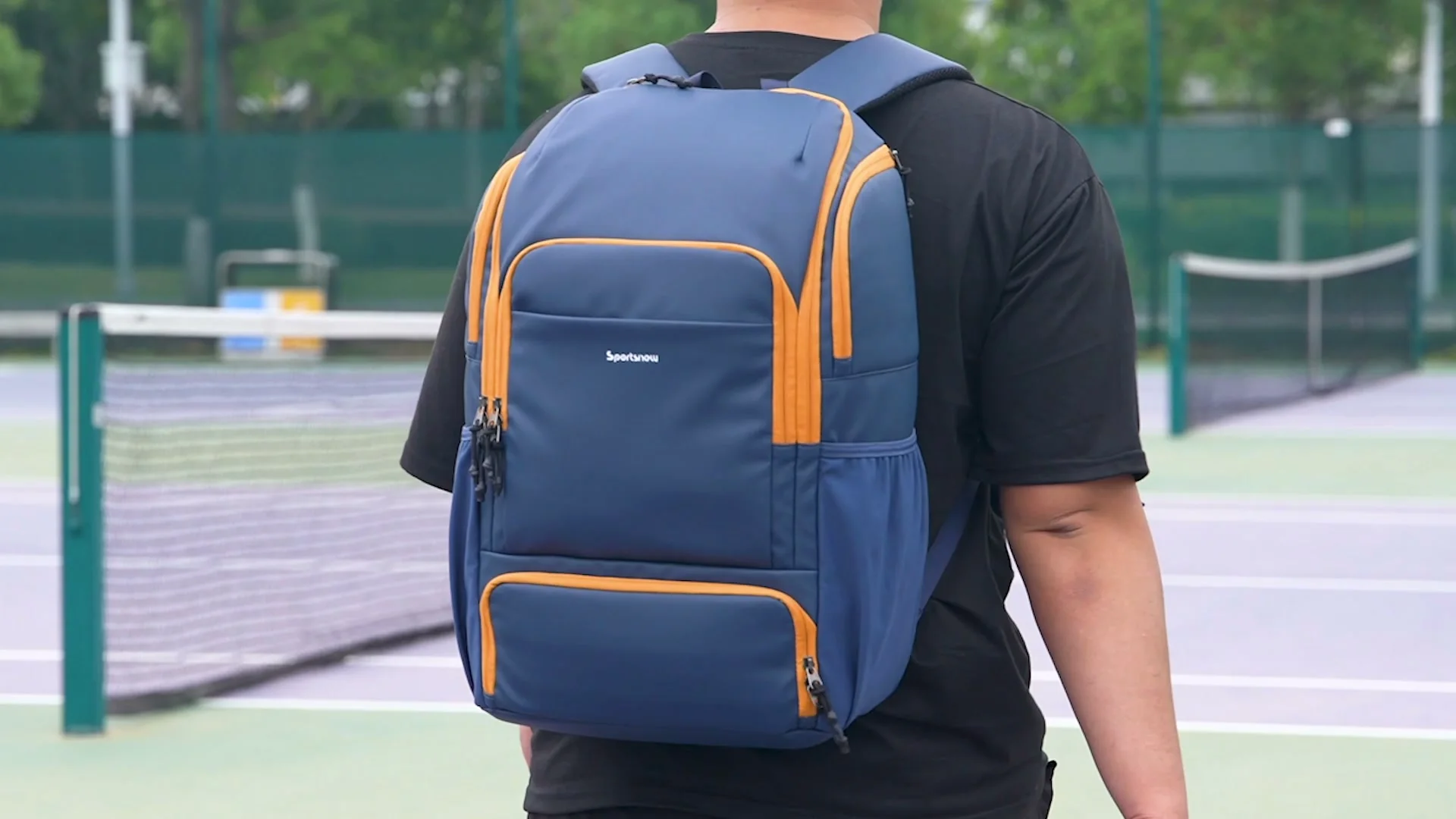
A pickleball bag carries a short list, but an awkward one. Paddles are flat and wide, and balls roll into corners. Court shoes come back dusty, and a full tumbler is the heaviest thing you will carry to the court. Where each of those rides decides whether a sling or a backpack suits your game. So the list comes before the bag.
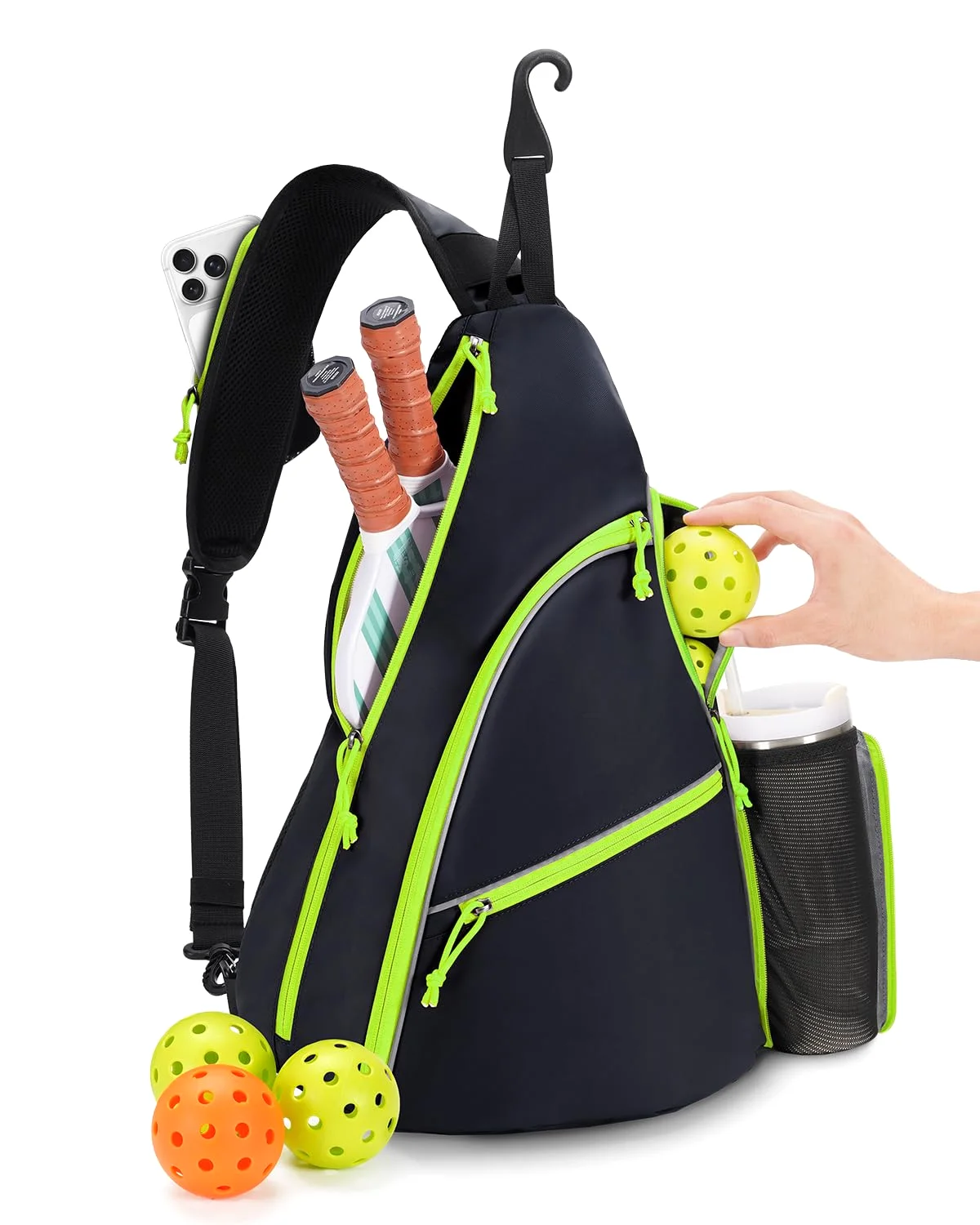
Start with the paddle, because a chipped edge or a scuffed face is the damage players notice first. Both of our slings, the Sportsnew Pickleball Sling with Paddle Sleeves and the Sportsnew Pickleball Sling with Reversible Strap, have two paddle compartments. Your own paddle takes one sleeve, and a spare or a partner's paddle takes the other. Neither face rides against keys or a water bottle.
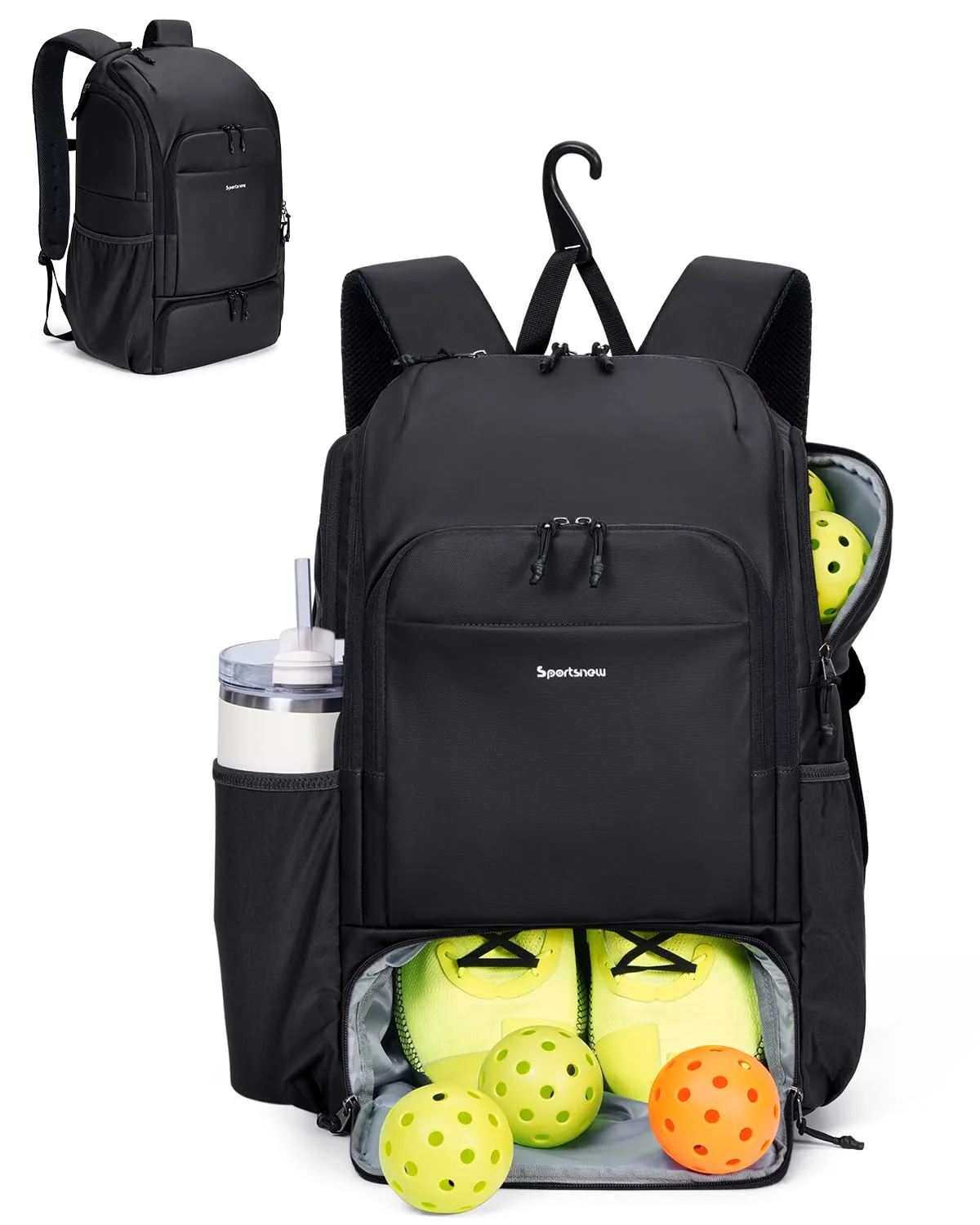
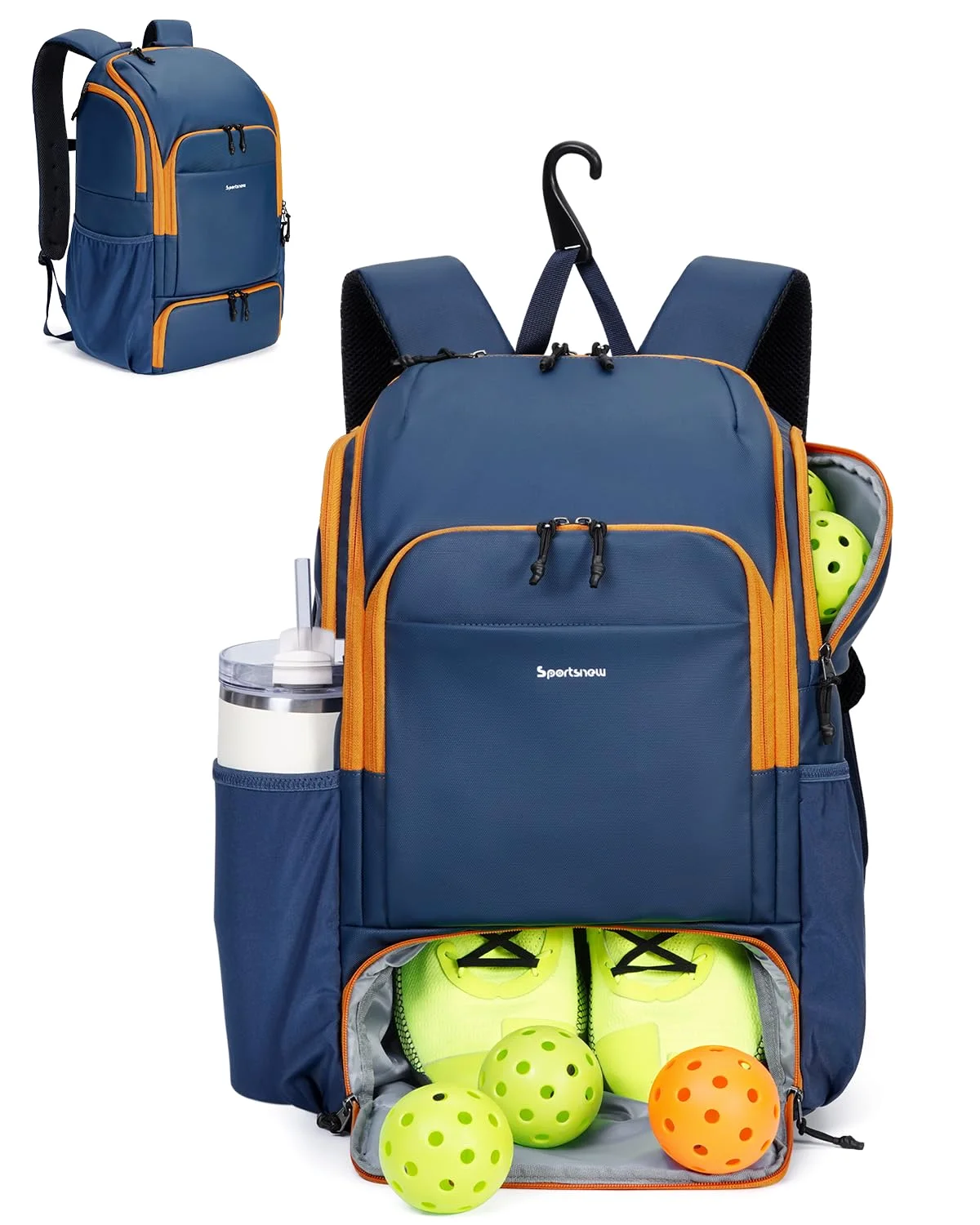
Balls come next. Each sling has an elastic ball pocket, which keeps your balls from rolling to the bottom under everything else. The Sportsnew Pickleball Backpack with Shoe Compartment goes further with two pickleball pockets and room for 8 pickleballs. That is enough for a court where the group shares one set.
Court shoes are the item that splits the two bag types. The backpack has a separate shoe compartment. A pair that has been on a gritty outdoor surface stays away from your towel and a clean shirt. Neither sling has a shoe compartment, so slings suit players who arrive already wearing court shoes.
Water is the heaviest thing on the list. The expandable mesh side pockets on the Paddle Sleeves sling take water bottles up to 64 oz, and the Reversible Strap sling takes bottles up to 40 oz. Both slings fit handled tumblers up to 32 oz. Is your tumbler a 40 oz model with a handle? Then the backpack is the court bag that takes it, since each of its two side bottle pockets fits a 40 oz handled tumbler.
Phone and keys need a pocket you can open without taking the bag off. On both slings that pocket sits on the shoulder strap, a zip pocket that fits a phone up to 7.83 inches. The backpack spreads small things across 11 pockets in total.
A towel, a light layer for a cool evening and a snack fill the rest. The slings hold 24 liters, the backpack 30 liters. Before you buy, lay your own kit on a table: paddles, the bottle you actually use, the shoes you play in, a towel and whatever you carry in your pockets. Count the paddles and read the size printed on your bottle. Add one more answer, about changing shoes at the court. Those three facts narrow the choice to one bag faster than any photo can. All three bags carry a fence hook, which matters once you reach the court and need somewhere to put the bag down.
The choice follows the length of your day. Open play at a park often means an hour or two, one paddle, a bottle and your keys. A league night adds a partner, a second paddle and maybe a change of shirt. A tournament day can run from early check-in to the last match, with shoes to change, two bottles to refill and a layer for the morning.
On one shoulder, a sling swings to the front when you want something from it. That is the reason players like it for open play. Your phone is in the strap pocket and the paddle sleeve opens at your side. You never put the whole bag down to reach a ball. The Paddle Sleeves sling has a convertible strap that you can set for the left or the right shoulder. The Reversible Strap sling lets you switch sides the same way. Both have a padded back panel, and the Paddle Sleeves sling adds reflective strips for an evening walk back to the car.
A backpack puts the load on two shoulders. The OrthoInfo page on backpack safety from the American Academy of Orthopaedic Surgeons is written about school bags for children and teenagers. It says nothing about pickleball. Its packing tips are still plain: always use both shoulder straps, tighten the straps to keep the load close to the back, put heavier items low and toward the center, and pack light. The same page also suggests a crossbody bag as a good alternative for carrying books and supplies. We read that as a reason to match the bag to the load, not as a ranking of bag types.
For a court bag, the weight question is mostly a water question. Paddles and balls are light, and a towel weighs little until it is wet. A 64 oz bottle full of water weighs far more than two paddles and a dozen balls. If you bring that much water plus shoes, the backpack with its chest strap and padded mesh back carries it on both shoulders. If you bring one paddle and a 32 oz tumbler, the sling is lighter to live with and faster to open. Look at how your week actually runs, how long you stay and how far the car is from the court. The bag type follows from that.
| Your day at the courts | Sportsnew bag that fits it | Why |
|---|---|---|
| Open play, one to two hours | Pickleball Sling with Paddle Sleeves | Two paddle sleeves, ball pocket, strap phone pocket, bottles up to 64 oz |
| League night with a partner | Pickleball Sling with Reversible Strap | Two paddle sleeves, strap on either shoulder, bottles up to 40 oz |
| Tournament day or shoes to change | Pickleball Backpack with Shoe Compartment | Shoe compartment, room for 8 balls, two side pockets for 40 oz handled tumblers, 30 liters |
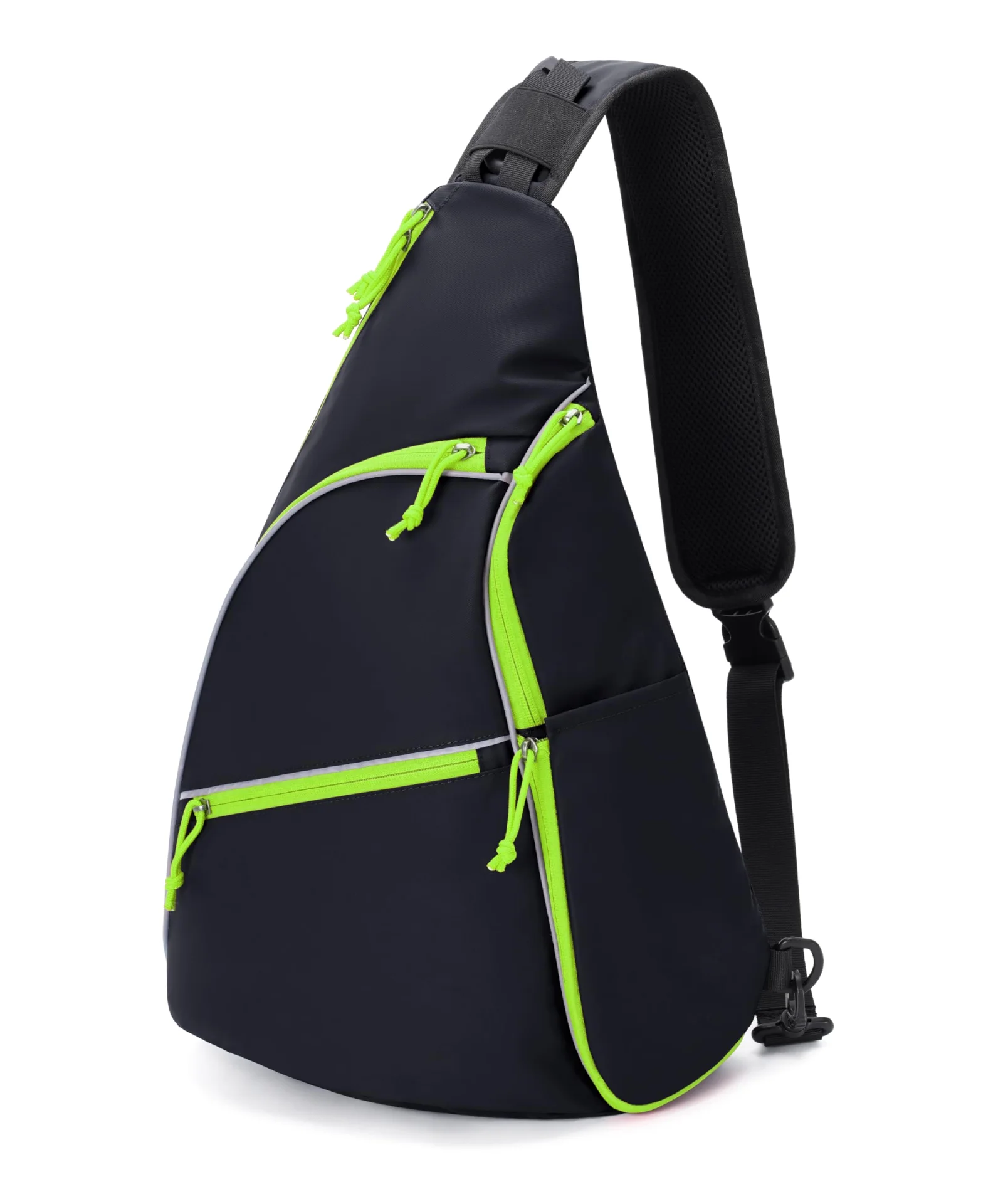
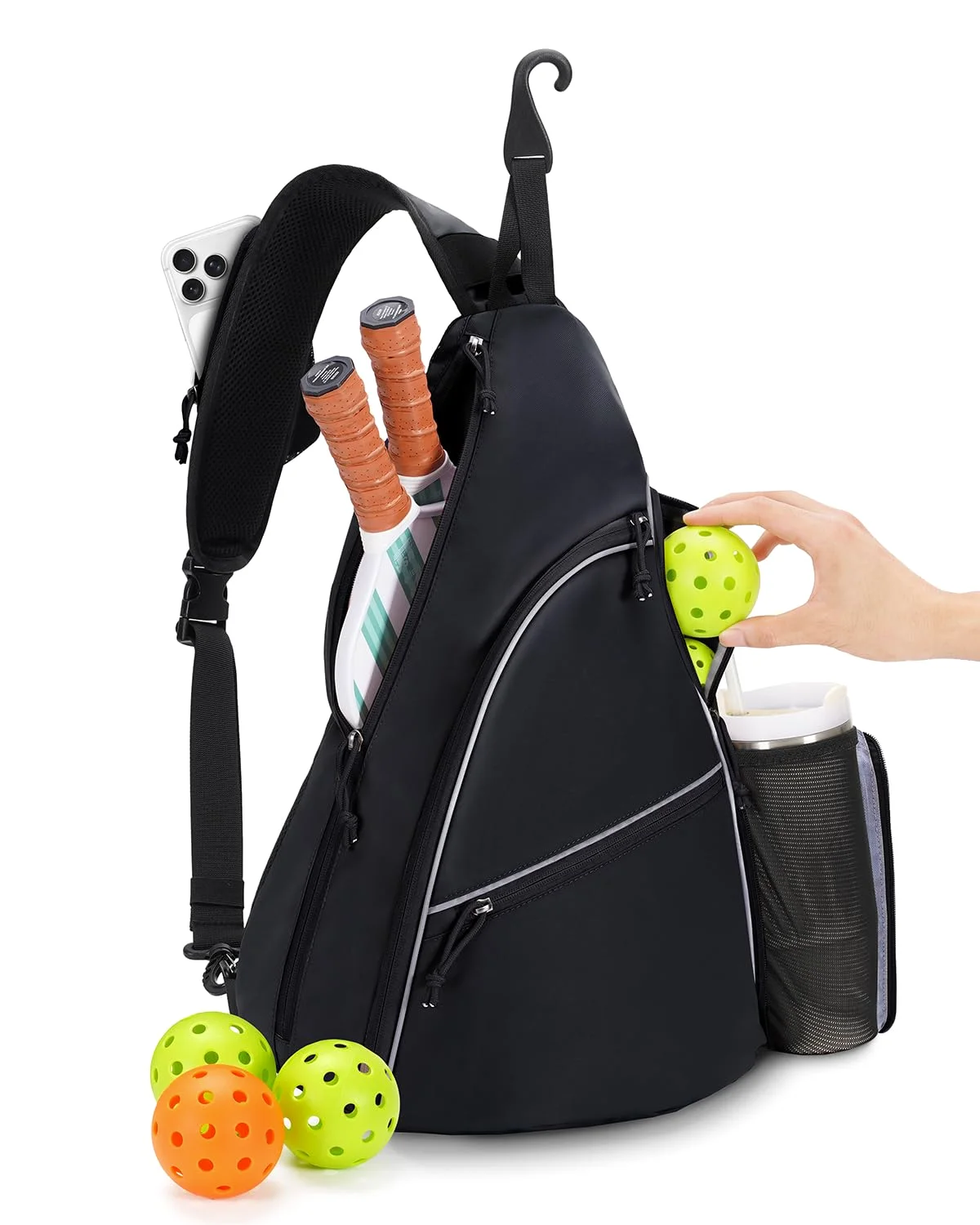
Pickleball sling
For pickleball with a strap that flips.

Walk past a busy set of public courts and you will often see bags hanging along the fence instead of sitting on the ground. A bag on the fence stays off a surface that is dusty, wet after rain or hot in the afternoon sun. It also stays out of the narrow walkway behind the baseline. Players step back there for lobs, and others cross there between courts. All three of our court bags have a fence hook for that reason: the Paddle Sleeves sling, the Reversible Strap sling and the backpack.
Etiquette at the court is about people more than bags, and the official guidance is about people too. The USA Pickleball Sportsmanship Guide does not mention bags or fences at all. What it does cover is how you share the courts. In social play it asks players to rotate on and off courts fairly and in line with local practice. It says not to jump ahead of others who are waiting, and not to rearrange paddles so a friend can move up. It also asks you to be prepared to play when it is your turn.
That last line is where the bag earns its place. When your group is called, a bag hanging at eye level lets you pull your paddle from its sleeve and walk on. A bag at the bottom of a pile on the bench means unzipping, searching and making four players wait. On both slings the paddle sits in its own sleeve, so it comes out without unpacking anything else.
The guide also covers crossing courts. If you must cross over or behind an active court, it says to wait until play has stopped and then cross quickly in a single group. A bag hanging from the fence beside your own court means one less trip along the back of someone else's game to fetch a towel or a bottle.
Local practice decides the details, whether that is a paddle rack, a whiteboard or simply asking who is next. Ask a regular the first time you visit, then hang your bag where the other bags hang. If the fence is full, a spot near your court entrance, off the walkway, does the same job.
One small habit helps at night. The reflective strips on the Paddle Sleeves sling make the bag easier to see on a dark fence line when you are the last group to leave.
Outdoor pickleball runs through the summer, and a court without shade gets hot by midday. The CDC page on heat and athletes says people who exercise on hot days are more likely to become dehydrated and get heat-related illness. Its advice for exercising while it is hot is practical and fits a day at the courts.
The CDC suggests scheduling workouts earlier or later in the day, when the temperature is cooler. It also suggests limiting outdoor activity in the middle of the day when possible. For open play, that means the morning session or the evening one. The page says to drink more water than usual and not to wait until you are thirsty. It notes that muscle cramping may be an early sign of heat-related illness. A few more points follow: wear loose, lightweight, light-colored clothing, wear and reapply sunscreen as the package says, and watch a teammate's condition while someone watches yours. If you feel faint or weak, it says to stop all activity and get to a cool place.
Those lines turn into packing decisions. More water than usual means a bigger bottle or two of them. On the Paddle Sleeves sling, a mesh side pocket takes a water bottle up to 64 oz, which covers a long open play session. The Reversible Strap sling takes bottles up to 40 oz. The backpack has two side bottle pockets, and each fits a 40 oz handled tumbler. On a tournament day that means one bottle for the morning and one for the afternoon.
Sunscreen that needs reapplying should ride where you can reach it between games. A small tube fits in a side pocket on the slings or in one of the backpack's 11 pockets, so you are not digging for it with a group waiting at the gate.
If you like your water cold, a separate insulated holder is worth a look. The Sportsnew Insulated Drawstring Bottle Sling 40 oz has an insulated lining between the bottle and the outside and takes 32 oz to 40 oz bottles. Our other 40 oz tumbler holders and the full range of water bottle holders are compared in our guide to choosing a holder for a 40 oz tumbler.
The CDC also points to its HeatRisk Dashboard, where you enter your zip code for the heat risk forecast in your area. A quick look before you leave home tells you whether this is a two-bottle day.
The ride home is where a court bag either stays fresh or does not. Dusty soles, a towel that has wiped three games of sweat and a shirt you changed out of all end up in the same space unless the bag keeps them apart.
On the backpack, the separate shoe compartment does that job for shoes. Your court pair goes in after the last match. The main compartment with your phone, keys and clean shirt stays away from the grit. For players who wear one pair to the court and change into another for the drive, that compartment is the main reason to pick the backpack over a sling.
A damp towel is a different problem. None of our pickleball bags has a wet pocket, so the towel needs its own plan. A simple one is to keep a plastic bag in a side pocket and seal the towel in it before it touches anything else. Another is to dry the towel on the fence beside the bag between games, then pack it last. On a sling, the damp towel and the plastic bag ride in the main space, away from the strap pocket where your phone sits. On the backpack, it can share the shoe compartment with your court pair, which keeps the damp and the dusty things in one place, apart from the rest of the 30 liters.
If your routine includes a gym session or a yoga class on the same day, a bag built for both jobs may suit you better. The Sportsnew 20L Yoga Gym Tote with Shoe Bin has a separate shoe compartment and a transparent wet-dry pocket for a damp towel. It adds 11 divided pockets and an external strap for a mat. It does not have paddle sleeves, so a paddle travels in the main compartment. The rest of our gym bags with a shoe compartment sit on one shelf, and mat owners can read our yoga mat bag guide for the studio half of the week.
Players who carry a small towel at the court can also look at the Sportsnew Magnetic Bottle Holder with Towel Pouch. It has a front drawstring towel pouch next to the bottle, takes a 40 oz handled tumbler or 20 to 40 oz regular bottles, and has a top grab handle.
A few habits keep any bag in better shape. Empty the bag the same evening, take the shoes out to air, and hang the bag open overnight. Our pickleball bags use water-resistant fabric, which helps on a wet morning, but a damp towel zipped inside for a day will still leave the inside damp.
Pickleball backpack
For full pickleball sessions with shoes.
Other brands publish their own lists of what their court bags hold. The useful comparison is what each one states on its own product page. We read the pages below in October 2026 and copied only what each brand says. Where a brand does not state a feature, the table says "not stated", which does not mean the feature is missing.
| Bag | Paddles | Fence hook or carabiner | Shoe space | Bottle pocket |
|---|---|---|---|---|
| Sportsnew Pickleball Sling with Paddle Sleeves | 2 paddle compartments | Fence hook | None | Bottles up to 64 oz, handled tumblers up to 32 oz |
| Sportsnew Pickleball Sling with Reversible Strap | 2 paddle compartments | Fence hook | None | Bottles up to 40 oz, handled tumblers up to 32 oz |
| Sportsnew Pickleball Backpack with Shoe Compartment | 2 pickleball pockets, 8 balls | Fence hook | Separate shoe compartment | 2 side pockets, 40 oz handled tumbler |
| Selkirk Core Line Sling | 1 paddle and a ball | Not stated | Not stated | Not stated |
| JOOLA Everyday Sling | Room for two paddles | Hideaway carabiner | Not stated | Not stated |
| JOOLA Vision II Backpack | Not stated | Not stated | Ventilated shoe partition | Not stated |
| Ame & Lulu Pickleball Time Backpack | Not stated | Not stated | Not stated | Not stated, bag is 13.5 x 5 x 16.5 in |
| Selkirk Core Line Day Bag | Up to 6 paddles | Not stated | Not stated | Not stated, laptop up to 15 in |
Read the paddle column first. Selkirk's Core Line Sling is stated to fit one paddle and a ball, so it suits a player who brings only their own paddle. JOOLA's Everyday Sling states room for two paddles, the same count as both of our slings. JOOLA also describes a hideaway carabiner to hang it courtside. Selkirk's Core Line Day Bag sits at the other end of the scale. It is stated to fit up to six paddles plus a laptop up to 15 inches. That makes it a bag for players who travel with several paddles or come straight from work.
The hanging column shows two ways to solve one problem. A fixed hook drops over the top rail or a link of a fence in one move. A carabiner clips to a link and can also clip to a bench frame or a cart, but it takes two hands. Neither is wrong, and the right one is the one your court has something to hang it on.
The bottle column is the one most pages skip. Of the five bags from other brands, none states a bottle size on the page we read. Our three bags state theirs, and for a player with a large tumbler that number decides the bag. If you already own a large tumbler, measure it against the numbers in the first three rows before you choose.
Shoe space is the second split. JOOLA's Vision II Backpack states a ventilated shoe partition, and our backpack has a separate shoe compartment. On the sling side, no bag in the table states a shoe space, which matches the sling's job as a light bag for players who arrive in court shoes.
The Ame & Lulu Pickleball Time Backpack page gives its size, 13.5 by 5 by 16.5 inches, but does not state a paddle count or a hook. For a closer look at how our bags line up against other brands in every category, see Sportsnew compared with other brands.
Two lists cover most players. Open play is a short visit where the line moves fast and you want your paddle in hand. A tournament day is long, starts early and often ends in a different temperature from the one it started in. The table below splits the items, and the notes under it say where each one rides in our bags.
| Item | Open play | Tournament day |
|---|---|---|
| Paddle | Your own | Your own plus a spare |
| Balls | Two or three | A full set if your group shares them |
| Court shoes | Worn to the court | Worn or packed in a shoe compartment |
| Water | One bottle | Two bottles, more than usual on a hot day |
| Towel | Small one | One for play, a plastic bag for the damp one |
| Phone and keys | Strap pocket | Strap pocket or a front zip pocket |
| Sunscreen | If the court has no shade | Yes, to reapply between matches |
| Layer | For an evening session | For the morning and for waiting between rounds |
| Snack | Optional | Something for the gap between rounds |
On a sling, the paddle and the spare go into the two paddle compartments. The balls go into the elastic ball pocket, the phone and keys into the zip pocket on the strap. A bottle rides in a mesh side pocket, and the towel and layer go into the 24-liter main space. That covers the whole open play column, as long as you arrive in your court shoes.
A league night sits between the two columns. You may bring a second paddle for a partner, a bigger bottle and a light layer, but the session ends the same evening and shoes are rarely changed. That is the case the Reversible Strap sling covers: two paddle sleeves, a bottle up to 40 oz and a strap that moves to the other shoulder whenever you want to switch sides. If your league plays outdoors in July, read the water row of the tournament column instead.
The tournament column is where the backpack makes sense. Shoes go into the separate shoe compartment, and two 40 oz handled tumblers fill the two side bottle pockets. The two pickleball pockets hold a set of 8 balls for warm-ups. A layer, a snack and a towel fit the 30-liter main body, and the 11 pockets keep a tube of sunscreen, a hair tie and a car key from sinking to the bottom.
Before you leave, run through the list once. Then look for the one item that matters most: the paddle itself. A paddle left on the kitchen table makes the rest of the bag irrelevant.
Indoor open play shortens the list again. There is no sun to plan for, so sunscreen stays home, and the floor by the bench is where the bag sits if the hall has no fence. A sling earns its keep here. It leans against the wall, the paddle comes out of its sleeve, and the strap pocket keeps your phone on you between games. If the hall is cool in the morning, the layer row still applies, and the 24 liters of a sling hold a light jacket with room to spare. Hang the bag by its fence hook near the door the night before, with the paddle already in its sleeve.
If you play open play a couple of times a week and arrive in your court shoes, start with a sling. The Sportsnew Pickleball Sling with Paddle Sleeves gives you two paddle sleeves and an elastic ball pocket. It adds a strap pocket for a phone up to 7.83 inches and side pockets for water bottles up to 64 oz. Its convertible strap sets for either shoulder, and the reflective strips help on an evening walk to the car.
If you want the same layout with a strap you can switch from one shoulder to the other, the Sportsnew Pickleball Sling with Reversible Strap does that. It comes in black or black with neon green and takes bottles up to 40 oz and handled tumblers up to 32 oz. It has the same two paddle compartments, ball pocket and fence hook. For a league night with a partner who forgets a paddle now and then, the second sleeve is the feature you will use most.
If you play tournaments, change shoes at the court or bring a 40 oz handled tumbler, choose the Sportsnew Pickleball Backpack with Shoe Compartment. It carries a full day in 30 liters. The separate shoe compartment, two side pockets for 40 oz handled tumblers, room for 8 pickleballs and 11 pockets keep that day in order. The chest strap and padded mesh back keep the load on both shoulders, which matches the OrthoInfo tip to use both shoulder straps. It comes in six colors, from army green and mint green to navy blue and gray.
Some players keep both: a sling for the quick weekday session and the backpack for the weekend event. All three bags hang from the fence by their hooks, so whichever one you bring, it stays off the court surface and out of the walkway. You can see every model side by side on our pickleball bags shelf, where the card for each bag shows its colors and current price. Whichever bag you take home, pack it once with your real kit before the first session. A paddle that sits too tight, or a bottle that leans out of its pocket, is easier to sort out at home than at the gate with a group waiting. If you also train in a gym or a studio, our gym bags with a shoe compartment and water bottle holders fill in the rest of the week.
Keep reading
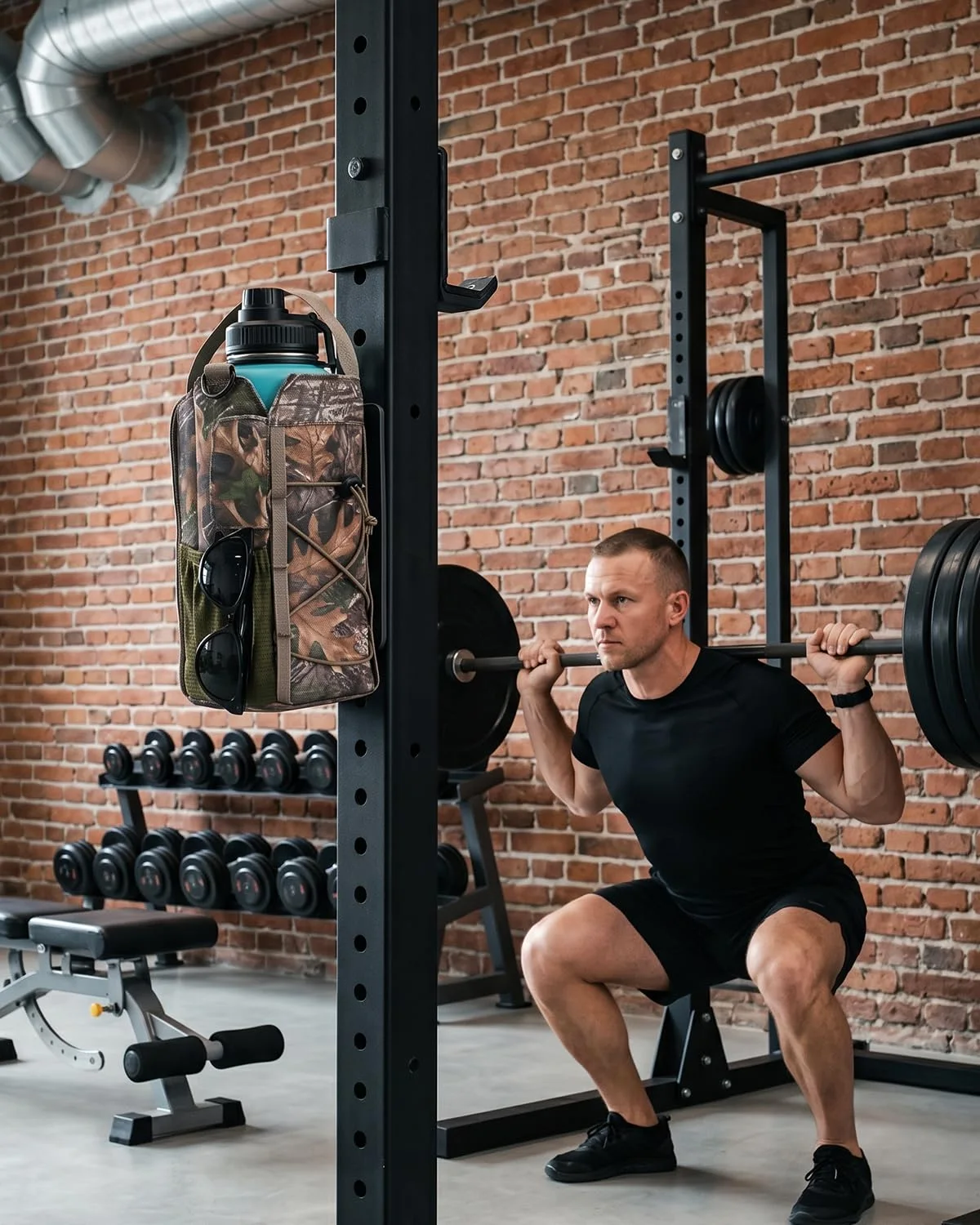
Handle or no handle, sleeve width, insulation, strap and pockets: how to match a crossbody holder to a 40 oz tumbler, with the Sportsnew slings side by side.
Read the guide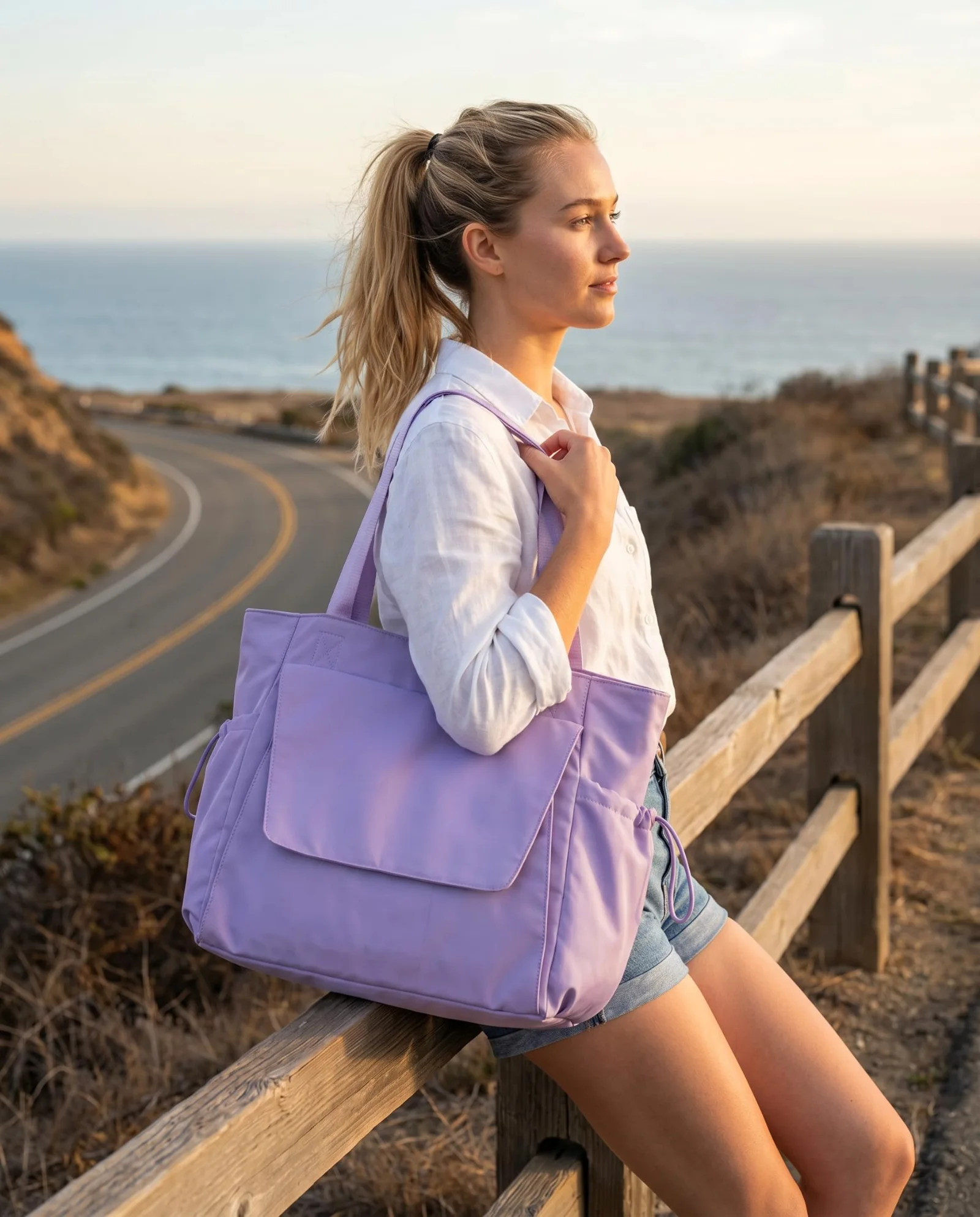
Mat width, rolled diameter and thickness decide the bag, and wet pockets, shoe space and straps decide the day. The Sportsnew mat bags and totes compared.
Read the guide